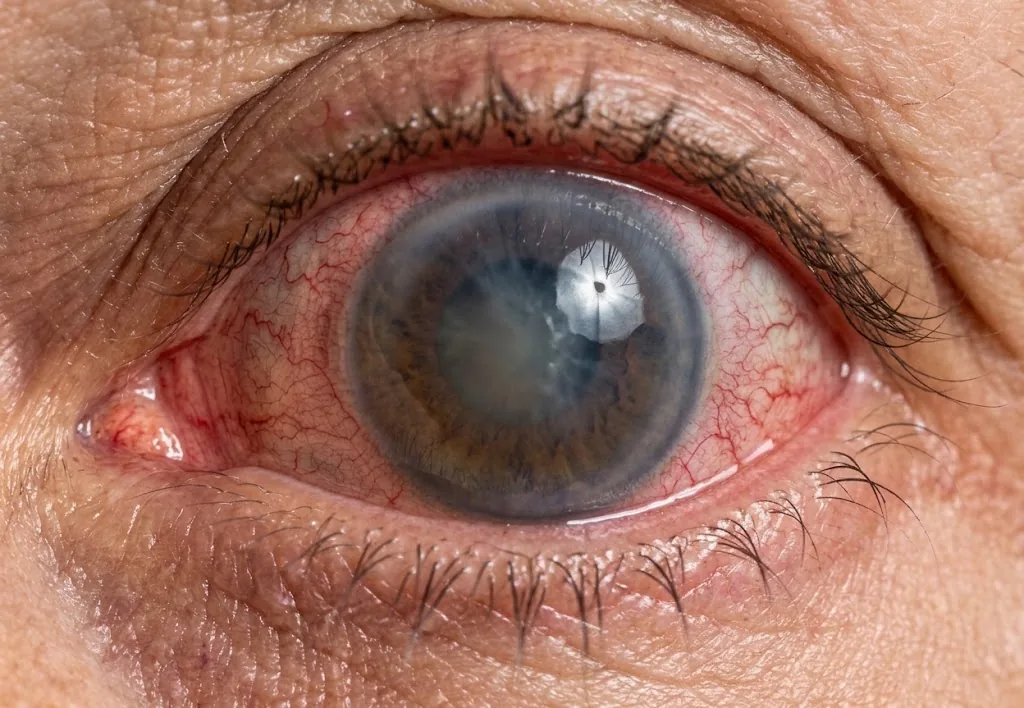
Glaucoma is the result of damage to the optic nerve. As this nerve gradually deteriorates, blind spots develop in your visual field.
This nerve damage is usually related to increased intraocular pressure. High eye pressure is caused by a buildup of fluid (aqueous humor) that circulates inside your eye. This fluid typically drains out through the trabecular meshwork at the angle where the iris and cornea meet. When fluid is overproduced or drainage channels fail, fluid cannot exit normally, raising pressure.
There are different types of glaucoma that affect the eye in distinct ways.
A less common form caused by blocked drainage canals, resulting in a sudden, sharp increase in intraocular pressure.
Also called normal-pressure or low-tension glaucoma. In this type, optic nerve damage occurs even though eye pressure remains within average ranges.
The exact mechanism causing nerve vulnerability at normal pressure levels is still being studied.
Occurs in infants when ocular drainage canals do not develop properly during the prenatal period.
An uncommon, often inherited condition. Microsurgery can frequently correct structural defects; other cases are managed with medication.
A range of options is available to lower eye pressure and protect the optic nerve from further damage.
Often the first line of defense. They lower eye pressure either by improving fluid outflow or reducing fluid production.
For many patients, a combination of medications and advanced laser therapy can safely stabilize eye pressure for years.
In our region, as in the rest of the world, there are many documented cases of glaucoma across its variants. For this reason, we strongly recommend regular comprehensive ophthalmologic checkups, particularly for adults and seniors.
Prevention is key
Do not wait for symptoms to appear. Early glaucoma diagnosis is vital to preserving your eyesight.